

One remarkable birth in Ghana has drawn attention to an emerging area of regenerative medicine. But beyond the headlines lies a fascinating scientific question: could the body’s own repair cells help shape the future of fertility?
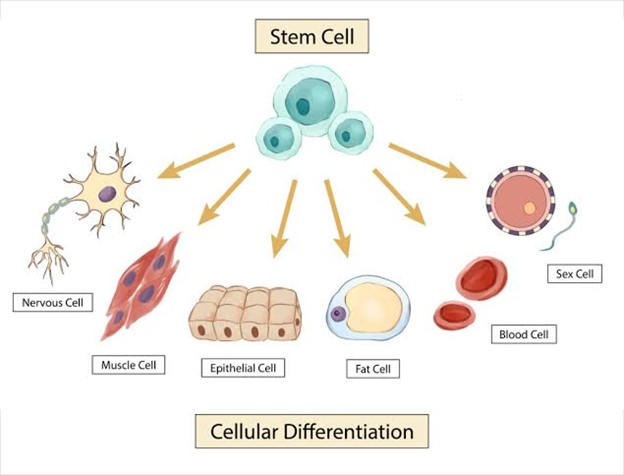
Every human life begins with a single cell. From that one fertilised egg emerges more than 200 specialised cell types that make up the human body. Every heart cell, brain cell, skin cell, bone and blood in the human body can trace its origins back to a stem cell. This remarkable transformation is possible because early embryonic cells can become almost any tissue in the body. Although most cells lose that flexibility as development progresses, populations of stem cells remain throughout life, quietly repairing and renewing tissues. Understanding how these remarkable cells function has transformed biomedical research and laid the foundation for regenerative medicine, a field that aims not simply to treat disease, but to help the body repair itself.
From tissue repair to reproductive medicine
For decades, regenerative medicine has focused on repairing damaged organs and tissues. Researchers are investigating whether stem cells can help restore heart muscle after a heart attack, regenerate cartilage in arthritic joints and better understand conditions such as Parkinson’s disease and diabetes. More recently, attention has turned to reproductive health and the future of fertility.
Infertility affects millions of couples worldwide, with advancing maternal age remaining one of its greatest biological challenges. Women are born with all the eggs they will ever have, and over time both the number and quality of those eggs decline. But pregnancy depends on more than healthy eggs alone. The uterus must also provide the right environment for an embryo to implant and develop. As women age, changes to the uterine lining, blood supply and hormonal environment can make successful implantation increasingly difficult, even when a healthy embryo is available.
This has led scientists to ask an intriguing question: could stem cells help restore a healthier environment within the uterus?
Helping the body do what it already does
Scientists now work with several types of stem cells. Embryonic stem cells can develop into almost any cell in the body, while adult stem cells play more specialised roles in maintaining and repairing tissues. More recently, researchers have developed induced pluripotent stem cells (iPSCs); ordinary adult cells that can be reprogrammed back into a stem-cell-like state, dramatically expanding opportunities for research and regenerative medicine.
In reproductive medicine, however, the focus is often on adult stem cells collected from a woman’s own body, such as bone marrow or fat tissue. Rather than replacing damaged organs or creating new eggs, researchers believe these cells may work by releasing signalling molecules that encourage tissue repair, stimulate the growth of new blood vessels and reduce inflammation within the uterus. The goal is not to reverse menopause, but to create a healthier environment where an embryo has a better chance of implanting and developing successfully.
Hope, with healthy caution
This emerging science recently entered the public spotlight following the birth of a baby to a 61-year-old Ghanaian woman after undergoing a stem cell-enhanced IVF procedure. According to her treating team, her own stem cells were used in an attempt to improve the condition of her uterus before embryo transfer. The story has captured public imagination because it hints at what regenerative medicine might one day achieve, changing the future of fertility as we envision it.
Yet scientists emphasise that stem cell-based fertility treatments remain an emerging field. While early clinical studies have reported encouraging results in selected patients, many have involved relatively small numbers of participants. Larger studies are still needed to determine how safe and effective these treatments are, which patients are most likely to benefit and whether they can consistently improve pregnancy outcomes.
For now, stem cells are not rewriting the rules of biology. They are, however, changing the questions scientists are able to ask. As regenerative medicine continues to advance, the greatest breakthrough may not be extending fertility itself, but learning how to harness the body’s own remarkable capacity for repair and offering new hope to people facing infertility. This is opening a new chapter in reproductive healthcare and changing the future of fertility.